Ethernet connections serve as the backbone of modern networking, providing reliable and high-speed data transfer for homes, businesses, and institutions. As technology continues to evolve, the need to extend Ethernet connections arises, whether for expanding network coverage, optimizing performance, or improving connectivity in challenging environments. In this article, we’ll explore the top five things you need to know when extending your Ethernet connections, shedding light on the key considerations, benefits, and interesting facts surrounding this crucial aspect of internet technology.
Your security business is growing, and so are the needs of your personnel and your clients. Ethernet extenders and PoE solutions help you scale your network without compromising on connectivity or performance. Before you embark on this project, however, here are five things you need to know.
Understanding Ethernet Connections
Ethernet, a standard for wired networking, has undergone numerous advancements since its inception. It remains one of the most reliable and efficient ways to transfer data within local area networks (LANs). Ethernet connections use cables to transmit data packets, offering consistent speeds and lower latency compared to wireless alternatives.
Number of Terminals
How many terminals will you need to connect to your Ethernet solution? The greater the number of terminals, the greater the load that is placed upon the network. This is especially true when all or most of these terminals are being used at the same time. Ethernet range extenders or repeaters may need to be installed, strengthening the connection even as user and terminal numbers grow.
Desired Functionality
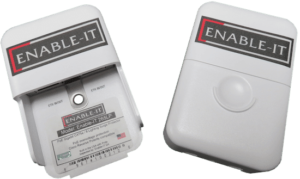
What kind of functionality do you need from your setup? You may want to streamline your network by providing power and connectivity together in a Power over Ethernet (PoE) configuration. In this case, an Ethernet extender with PoE may be required, such as the Enable-IT 821P PoE Extender kit.
You may also need to support expanded functionality across your terminals. Media streaming and real-time video analysis are common Ethernet applications for security providers and will increase the network load. This will need to be taken into account as you plan your future network load requirements.
Ethernet Extension Distance
How far do you need to extend your network? The standard length of Ethernet cabling will be 100 meters, and this will meet the needs of smaller security operations. However, this may not be sufficient to handle the needs of larger-scale security providers.
Define your Ethernet cabling needs ahead of time. Remember that you may need to deploy Ethernet range extenders and other solutions to achieve the right level of performance when you extend your network beyond 100 meters.
Expanded Throughput
What are your throughput needs, and how will they increase in the future? As your security business scales, your network will need to scale too. This does not simply mean adding more cable but instead relates to how you will handle increased throughput. Draw upon current data and projections to assess your evolving throughput needs, and make sure your Ethernet hardware is capable of hitting these targets.
Waterproofing and Outdoor Capabilities
If you need to implement Ethernet PoE extenders in exposed locations out of doors, specialized products may be necessary. Enable-IT’s 865W PRO Outdoor Gigabit PoE Extender will help you achieve this.
Shoring up your network with waterproof and outdoor-rated Ethernet PoE extender hardware dramatically increases the potential of your security operation. You will be able to achieve monitoring and surveillance in locations that would otherwise be left vulnerable, eliminating downtime and extending the life of your system components. In turn, you will be able to pass valuable peace of mind and reliability on to your own clients.
Factors to Consider When Extending Ethernet Connections
- Cable Quality: The quality of Ethernet cables directly impacts signal strength and data integrity. Choose Cat6 or Cat6a cables for Gigabit speeds, and Cat7 or Cat8 cables for even higher data rates.
- Distance Limits: Ethernet connections have distance limitations before signal degradation occurs. Using signal boosters or switches can help extend these limits without compromising quality.
- Interference and EMI: Electrical interference can disrupt Ethernet signals. Shielded cables and proper cable management can mitigate this issue, ensuring a consistent connection.
- Ethernet Extenders: Ethernet extenders use existing wiring, like phone lines or power lines, to extend Ethernet connections over longer distances. This can be a cost-effective solution for large premises.
Conclusion
Ethernet connections continue to be the backbone of reliable and high-speed networking. Extending these connections is essential for maintaining optimal performance, especially as our reliance on the internet grows. By understanding the technical aspects, considering crucial factors, and being aware of interesting facts, you can confidently extend your Ethernet connections to meet both present and future needs. As technology marches forward, the ability to maintain seamless connectivity will play a vital role in enhancing our digital lives.
Grow Your Security Provider Network the Right Way
Scaling your security business and extending your network can be a painless process. Take a look at our product pages and find the Ethernet extender solutions you need. Products such as the Enable-IT 821 Ethernet LAN Extender and 860X PRO Gigabit Ethernet Extender are delivering security providers the flexibility and capability they need to do more for clients.
Reach out to our team to learn more about any of the solutions we offer.